What should a wedding planner's marketing plan for engagement season include?
A website that answers price and next step before December, a same-day reply habit through the holidays, and a steady trickle of useful posts, reviews and follow-ups from November to February. Engagement season is when couples who will marry in late 2027 and 2028 start looking, so the work you do now books next year's calendar.
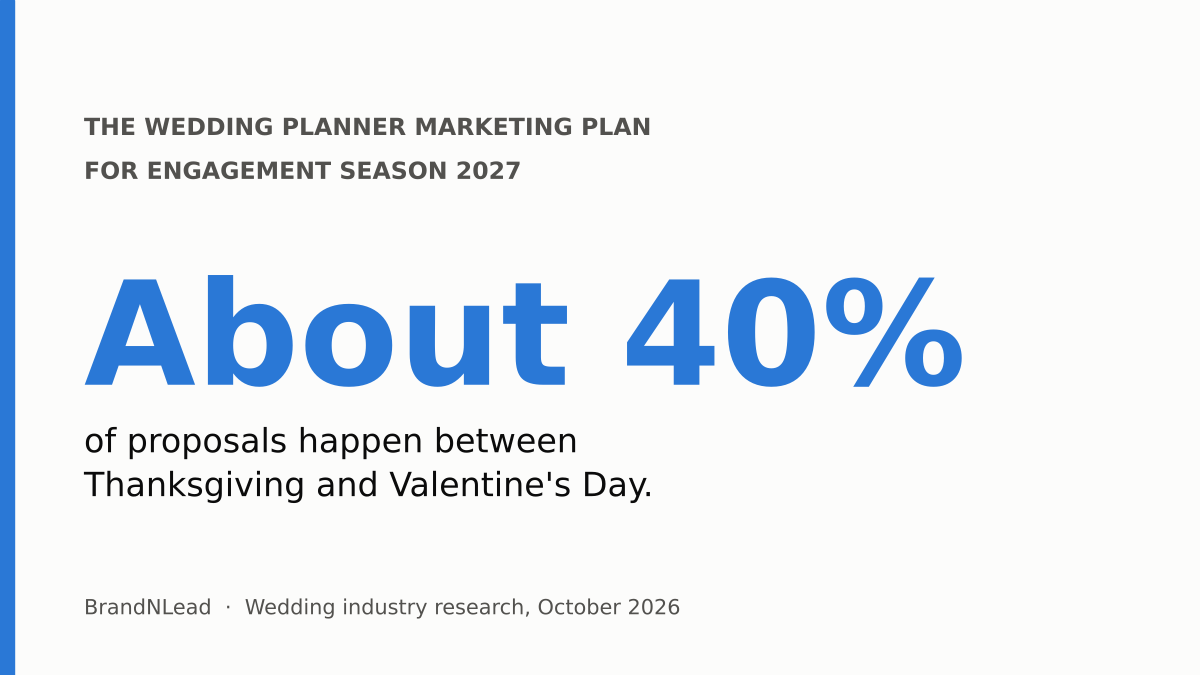
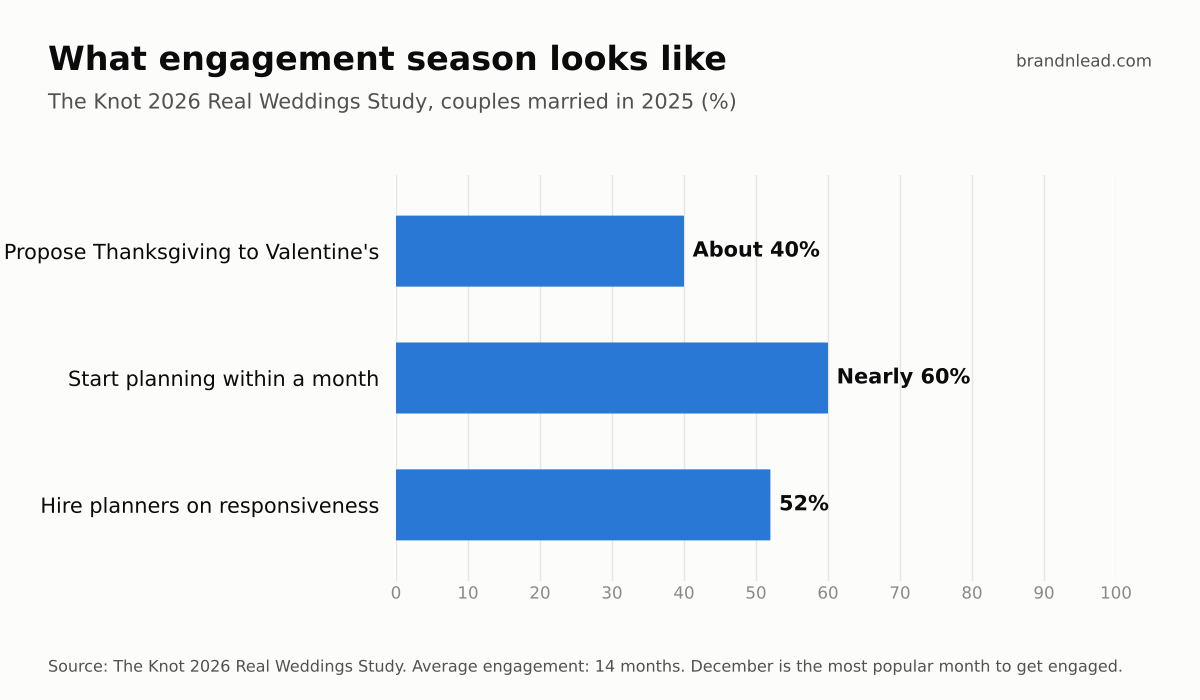
The timing is clear in The Knot's 2026 Real Weddings Study of couples married in 2025: December is the most popular month to get engaged, around 40% of proposals happen between Thanksgiving and Valentine's Day, and nearly 60% of couples start planning within a month of getting engaged (The Knot 2026 Real Weddings Study).
Which weddings are you booking during engagement season?
Mostly weddings 11 to 18 months away. The same Knot study puts the average engagement at 14 months, with around 40% of couples engaged for 11 to 18 months. A couple who gets engaged at Christmas 2026 and follows the average marries around February 2028; at 11 to 18 months, between late 2027 and mid-2028.
That changes what you should show. Couples in January are deciding on a date, a budget and a venue, so your website should answer the questions they have at that stage: do you have my date, roughly what will this cost, and what happens if I book you now?
Are planner websites ready for engagement season?
Most aren't. In our October 2026 audit of 74 live US and UK wedding planner homepages (full audit), the basics couples look for in their first week of planning were often missing:
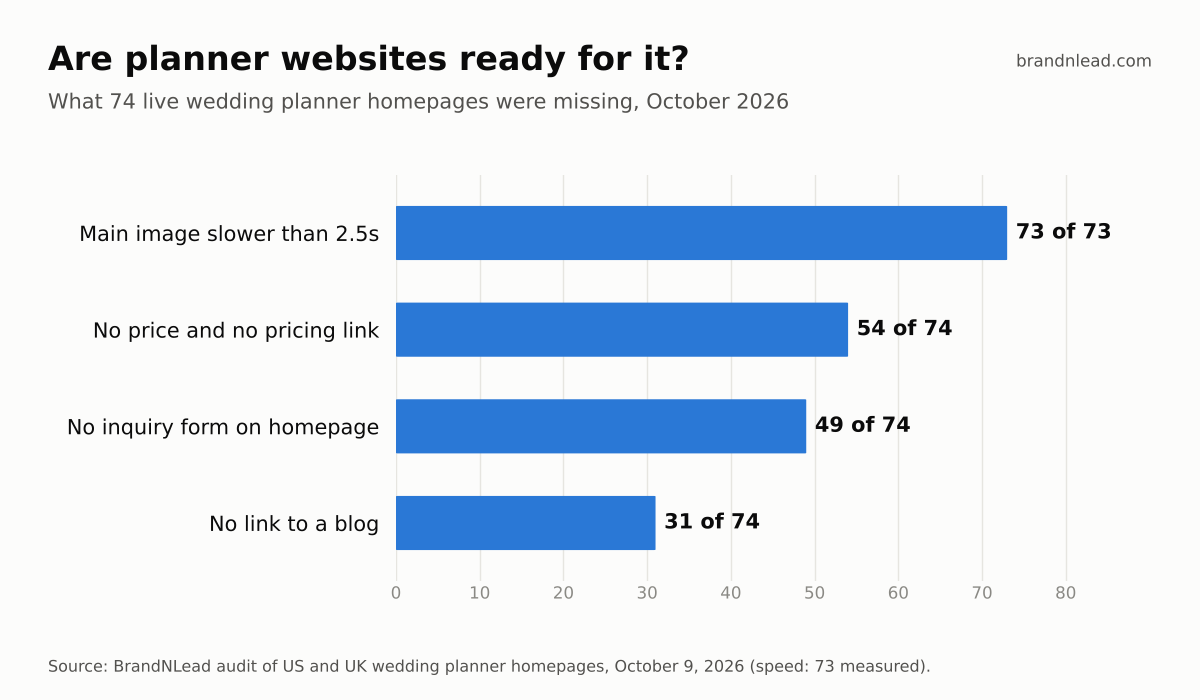
- 54 of 74 showed no price and didn't link to a pricing page. Couples who start planning within a month are setting a budget. A starting price helps the right ones inquire; our post on why pricing guides get ghosted shows how.
- 49 of 74 had no inquiry form on the homepage. Most linked to a contact page instead, which is one more step on a phone.
- 31 of 74 had no link to a blog. Without one, there's nowhere to publish the guides and real weddings that newly engaged couples search for.
- None of the 73 we measured showed the main image within 2.5 seconds on a phone, the time Google counts as good. The median was 9.7 seconds.
Fixing those four in November is worth more than any December campaign. Our guide to getting more inquiries from your website walks through each one.
What should you do each month from November to March?
Here's the plan we'd follow, month by month. It's our recommendation, built on the timing data above, not a measured result. Copy it into your calendar:
NOVEMBER: get ready before the rush
- Put a starting price on your website
- Test your inquiry form on your own phone
- Write a reply template and set a same-day reply rule
- Ask this year's couples for Google reviews

DECEMBER: peak proposal month
- Post one real wedding and one "what happens next" guide
- Update your directory profiles and Google Business Profile
- Answer every inquiry the same day, holidays included

JANUARY: couples are planning
- Publish a page that answers what newly engaged couples ask
- Follow up every unbooked inquiry once
- Email past couples and vendor partners for referrals

FEBRUARY: Valentine's and the last wave
- Share a Valentine's proposal or engagement story
- Follow up December and January inquiries again

MARCH: look at the numbers
- Inquiries, calls booked and bookings by source
- Keep what worked; cut what didn't
How fast should you reply to inquiries in engagement season?
The same day, if you can. In The Knot's 2026 study, 52% of couples choosing a planner named responsiveness as a top deciding factor. December inquiries often arrive in holiday weeks when most businesses go quiet, so a planner who replies within hours stands out. Our AI guide for planners has a prompt that drafts a first reply in seconds, and our free client questionnaire gives you the first questions to send.
Where should a planner spend marketing time in engagement season?
Where couples look. Our post on where couples find wedding planners breaks down The Knot's data on friends and family, search, directories and AI assistants. For most planners that means three things in this order:
- Your own website, fixed as above, because every other channel sends couples there.
- Google: an up-to-date Business Profile, fresh reviews from this year's couples (how to ask), and pages for the places you really serve (local SEO for planners).
- Referrals and directories: a message to past couples and vendor partners in January, and a refreshed directory profile if you pay for one. Our review of whether The Knot is worth it helps you decide whether to.
If you'd rather have the website side done before December, that's what our website design for wedding planners covers.
How we checked this
- Engagement and planning data: The Knot 2026 Real Weddings Study (couples married in 2025), read October 16, 2026.
- Planner websites: BrandNLead audit of 74 live US and UK wedding planner homepages, checked October 9, 2026; mobile speed from Google PageSpeed Insights for the 73 that could be measured.
- The plan: our recommendation, based on the timing data above.